Proposal · Pandemic Treaty PABS Simulation Tool · October 2026Open the simulation tool → · Home
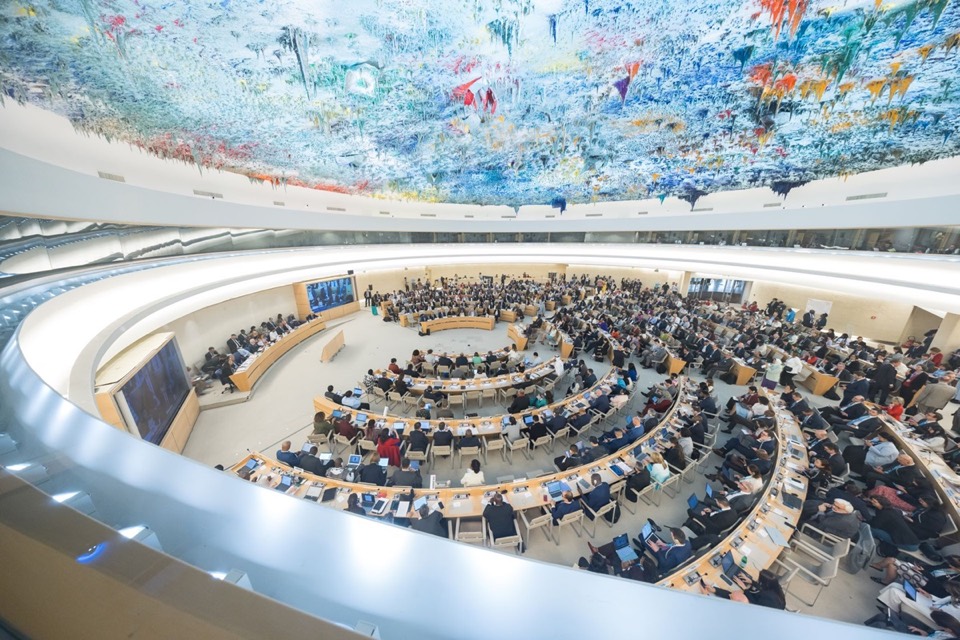
Committee A of the Seventy-eighth World Health Assembly in session in Geneva, 19 May 2025

WHO Pandemic Agreement · PABS Annex

Bringing the PABS Annex to life: a simulation tool for the negotiations

How the proposed terms would work in a future pandemic, simulated to serve the negotiations. Proposal for a working prototype.

Member States approve the WHO Pandemic Agreement in Committee A, Geneva, 19 May 2025. Photo © WHO / Pierre Albouy
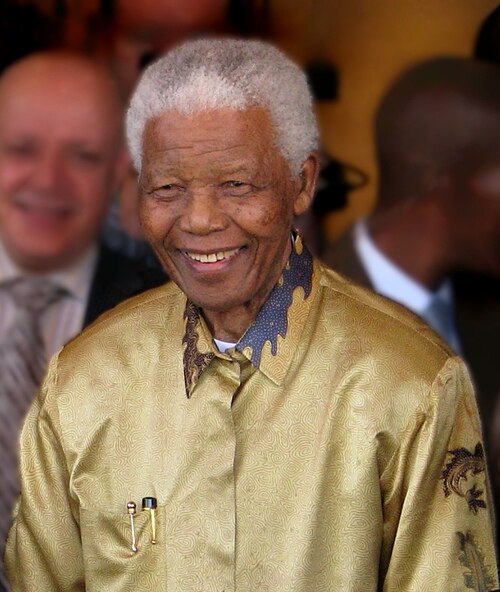
Nelson Mandela smiling, Johannesburg, May 2008

“It always seems impossible until it’s done.”

Attributed to Nelson Mandela

Photo: Johannesburg, 13 May 2008, South Africa The Good News, CC BY 2.0

Eighteen months of talks, and the red lines have barely moved

May 2025

Agreement adopted

WHA78.1. Article 12 defers PABS to an annex

Jul 2025 – Sep 2026

IGWG-1 to IGWG-8

Almost nothing in the on-screen text marked as agreed

May 2026

WHA79 extends

Mandate now includes legally binding contracts

2–13 Nov 2026

IGWG-9

Next formal session

23–30 May 2027

WHA80

Deadline for the annex

Without the annex, the Pandemic Agreement cannot open for signature. The whole treaty waits on it.

Sources: WHA78.1; A79/8 (13 May 2026); A/IGWG/8/4 (25 Sep 2026); A/IGWG/7/3 Rev.1

One bargain blocks the annex: is access to pathogens linked to benefits?

Group for Equity · Africa Group · Pakistan

“We cannot accept, under any configuration, an approach that delinks access from benefit sharing”

Indonesia, for the Group for Equity · TWN, 13 Jul 2026

“binding benefit-sharing commitments at the point of use”

Algeria, for the Africa Group · HPW, 17 Jul 2026

EU · Switzerland · IFPMA

“This transactional approach seems to us very unsuited to get to good results”

EU negotiator · HPW, 11 Sep 2026

“linking access to financial obligations, risks creating barriers to rapid sharing”

IFPMA statement, IGWG-6, 23 Mar 2026

Neither side can see what its own position would deliver in an outbreak. Positions are argued in the abstract.

The tool: test a whole package, see what it delivers
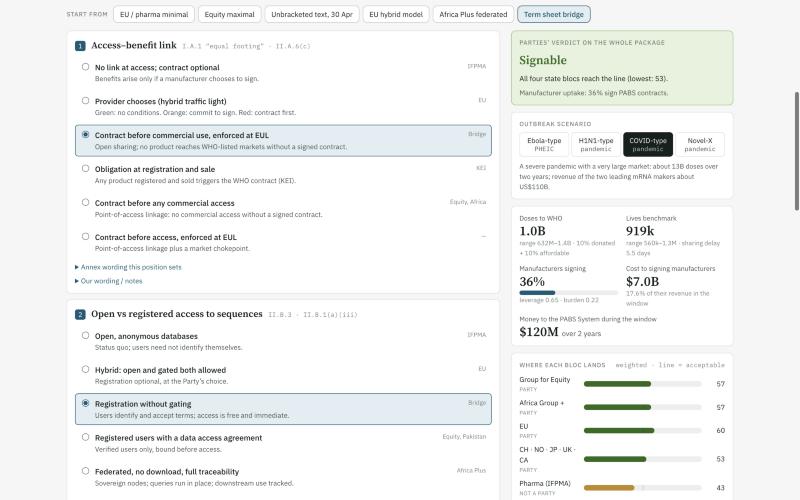
Package screen of the simulation tool: issue ladders on the left, a green Signable verdict, scenario results and bloc acceptance on the right

1 · Build

A position on each of seven key issues, with your own wording

2 · Verdict

Could the Parties sign it? Who blocks, and why

3 · Consequences

Doses to WHO, money, manufacturer uptake, in four outbreak scenarios

4 · Trades

The swaps that bring every Party over the line

MVP live: see the simulation tool (link on the front page). Base text: draft annex, on-screen text of 30 April 2026 (A79/8)

Packages, not clauses: seven issues decide the annex

Key issueEquity · Africa · PakistanEU · Switzerland · IFPMATerm sheet bridge
1. Access–benefit linkContract before accessNo link at accessContract before use, enforced at EUL
2. Sequence accessRegistered users onlyOpen, anonymousRegistration, no gate
3. Who signs contractsAll users, annexed nowWilling manufacturersTiered contracts, annexed now
4. MoneyMandatory, revenue-linkedCost recovery onlyFee + revenue % above a threshold
5. PHEIC set-aside20%, of which 8–10% freeNo fixed figureFloor, in-scope pathogens only
6. LicensingMandatory, royalty-freeVoluntary onlyStandby licences on shortfall
7. National ABS lawsFallback to national lawPABS displaces themFallback after a COP finding

Positions from A79/8, EU input (17 Oct 2025), IFPMA statements and IGWG-7/8 reporting. Bridge terms are proposals, not any bloc’s position.

Both extremes fail; the bridge is signable and delivers the most doses

PackageSignable?Blocked byDoses to WHO
EU / pharma minimalNoEquity, Africa (veto)347M
Equity maximalNoEU, G6 (veto)65M
EU hybrid modelNoEquity, Africa (veto on linkage)982M
Africa Plus federatedNoG6 (veto), EU397M
Term sheet bridgeYesNone; lowest Party at 53/1001.0B

Maximal terms push manufacturers out of an opt-in system: 2% sign, so fewer doses arrive. Pure voluntarism leaves the system nearly empty.

COVID-type scenario (≈13B doses over two years). Illustrative model, not validated; bloc coding is a first pass for coordinators to correct.

Built for what delegations worry about

Anonymous

No account, no login, no country field

Nothing leaves the browser

No server calls, no logging, no analytics

No attribution

Packages carry no country name

Closed text stays home

Each delegation loads its own copy, never pooled

Testing is not committing

A package tested here has no standing

Same engine for all

Every assumption visible; each bloc sets its own weights

One limit we state openly: the service hosting the link can see that it was opened, and by which signed-in account.

The prototype: the live text in, a verdict out, inside each delegation’s own workspace

One delegation’s private workspace · nothing pooled

Current text

The delegation uploads its own copy of the on-screen text

Text agent

Splits it into issues and brackets; reads new wording; cites the paragraph

Package model

Participation, doses, money, bloc acceptance and vetoes

Outputs

Verdict, comparison, trades, a brief for capital

Built on a static web app (the MVP) plus a Claude Managed Agent for reading text, one isolated session per delegation, hosted by a neutral institution with clear data-residency terms.

From MVP to WHA80 in four steps

Now · IGWG-9

MVP in coordinators’ hands

3–5 bloc coordinators test it in the margins of 2–13 Nov and correct the bloc coding

By ~30 Nov 2026

Working prototype

Private text upload, agent reading of new wording, sourced scenario data, security review

For IGWG-10

Validated version

Calibrated on H1N1 2009, PIP, COVID-19 and mpox; cross-bloc review panel; six UN languages

23–30 May 2027

WHA80

Support through adoption; hand-over for the first Conference of the Parties

IGWG-10 timing to confirm: expected February 2027; the IGWG-7 timeline (A/IGWG/7/3 Rev.1) lists 15–19 March 2027. A special WHA in the week of 14 Dec 2026 is possible, not confirmed.

A small team, funded in phases

PhaseLengthEstimate (US$)
1 · Working prototypeto ~30 Nov 202670k–120k
2 · Validated versionDec 2026 – IGWG-10250k–400k
3 · Support to WHA80to May 2027100k–150k
Total~7 months420k–670k

Team

  • Product and policy lead
  • Full-stack engineer
  • Health economist / modeller
  • Treaty-law adviser, part-time
  • Review panel balanced across blocs

Planning estimates, to be confirmed with quotes. Staff is most of the cost; agent runs and hosting are small next to it.

Neutral by governance, not just by design

Governance

  • A neutral host institution
  • A review panel drawn from every bloc
  • Method, data and weights published
  • Funded by no party to the negotiation
RiskResponse
Live text is closed-sessionEach delegation loads its own copy privately
Numbers attackedRanges, calibration, cross-bloc review
Seen as one side’s toolSame test for every bloc; open weights
Nobody uses itStart with coordinators; brief the Bureau
Time runs outPhase gates; each step useful alone

What we need before IGWG-9

1

Phase 1 funding

US$70k–120k (estimate) from a funder outside the negotiation

2

Three to five coordinators

From the Group for Equity, Africa Group, EU and G6, to test it at IGWG-9

3

A neutral host

An institution trusted across blocs to run the prototype

“It always seems impossible until it’s done.” Attributed to Nelson Mandela

Contact: [name, email]